“White noise”
The Curious Incident of the Dog in the Night-Time“White noise” names both the sensory overload that can overwhelm Christopher and the sound that sometimes makes the world bearable. Its meaning turns on a distinction between noise that drowns out everything else and the relative quiet he finds in rain.
Overload and Protection
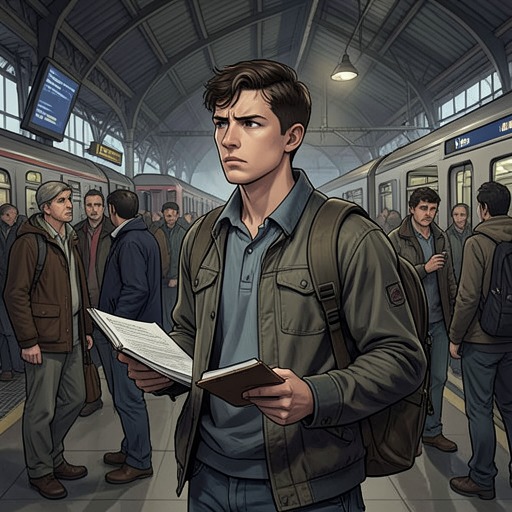
When a policeman’s questions come too quickly, Christopher’s mind fills with information until he rolls onto the lawn, presses his forehead to the ground, and groans. He describes the sound he needs as a radio tuned halfway between stations and turned up: the resulting white noise prevents him from hearing anything else, and that exclusion makes him feel safe. The image gives a precise account of protection through sensory blockage rather than through understanding or reassurance.
The metaphor also shows how bodily the overload is. Christopher’s response is not simply to explain that the questions confuse him; he withdraws to the ground and makes a sound his father recognizes as groaning. The policeman then lifts him by the arm, a touch Christopher dislikes, so the scene contrasts the refuge he seeks by shutting out incoming stimuli with the continued pressure of other people’s actions.
Confusion and Comprehension
Christopher distinguishes this useful white noise from the discomfort of processing several meanings at once. Explaining the joke about a face being “drawn” while curtains are real, he identifies three meanings of “drawn” and then compares holding them together to hearing three different pieces of music or listening to three people speak about different things. Unlike white noise, which silences competing input, the joke forces distinct meanings to remain simultaneously audible in his mind.
That contrast helps explain why he says there are no jokes in his book. The difficulty is not that he cannot describe the wordplay: he carefully sets out how each meaning applies. Rather, making one word carry all three meanings at the same time feels uncomfortable and confusing. White noise supplies a model for the difference between reducing perception to one enveloping sound and being pressed to attend to several separate signals at once.
Rain as a Chosen Quiet
On a Sunday when it rains very hard, Christopher says the sound is like white noise everywhere, “which is like silence but not empty.” Here the image is no longer a defensive response to questions. Rain fills the surroundings with a continuous sound that he likes, while its resemblance to silence leaves room for attention rather than erasing the world.
Watching the water fall in the street, he sees white sparks and traces the water’s movement from the oceans through evaporation, rain, gutters, a sewage station, and a river back to the ocean. The rain’s enveloping sound accompanies an expansive chain of connections: the quiet is not empty because Christopher’s attention moves outward through the water cycle. Across the book’s uses, white noise can therefore mark both a retreat from overwhelming input and a calm acoustic space in which sustained observation becomes possible.